


Select A Store
Select Store
My Store:
Select A Store
Availability:
$9.99
Used
-
Trade Paperback
-
9781432869212
Overview
Overview
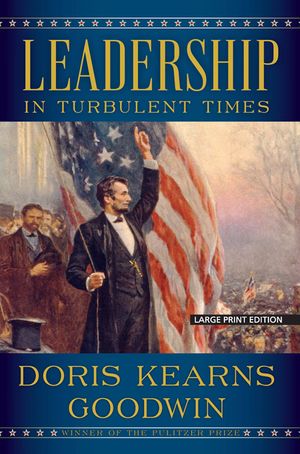
The New York Times bestselling book about the early development, growth, and exercise of leadership from Pulitzer Prize-winning author Doris Kearns Goodwin "should help us raise our expectations of our national leaders, our country, and ourselves" (The Washington Post).
"After five decades of magisterial output, Doris Kearns Goodwin leads the league of presidential historians" (USA TODAY). In her "inspiring" (The Christian Science Monitor) Leadership, Doris Kearns Goodwin draws upon the four presidents she has studied most closely--Abraham Lincoln, Theodore Roosevelt, Franklin D. Roosevelt, and Lyndon B. Johnson (in civil rights)--to show how they recognized leadership qualities within themselves and were recognized as leaders by others. By looking back to their first entries into public life, we encounter them at a time when their paths were filled with confusion, fear, and hope.
- Format: TradePaperback
- Author: Goodwin, Doris Kearns
- ISBN: 9781432869212
- Condition: Used
- Dimensions: 8.40 x 1.80
- Publication Year: 2019
Language:
English
Customer Reviews
Rating Snapshot
5 ★
100%
4 ★
0%
3 ★
0%
2 ★
0%
1 ★
0%
5 Ratings
0
0% Would Recommend
0 Recommendations
Review Images
Sort by:
-
Must read
Kristal S. - 4 years 9 months agoAbsolutely fantastic. Easy read, very informative and inspiring. The sections are well researched and begin in the early years with the ups and downs of both Theodore and FD Roosevelt, Abraham Lincoln, and LB Johnson. Great insight as to what formed these great leaders and how they came to make the decisions they made as well as the outcomes for the United States.
-
Highly recommended
Deborah M. - 6 years agoHighly recommend. The author profiles four presidents, the adversity they faced and overcame, then details how they led effectively when facing unique challenges of their times. I learned a lot--this was a worthwhile read.
-
Comparing leaders
Alisa C. - 6 years 4 months agoIt's like nothing I've ever read before, since here it compared the different leaders during their struggles, as opposed to just reading about their biographies
-
Leadership lessons from Lincoln, TR, FDR and LBJ
HPB S. - 6 years 6 months agoDoris Kearns Goodwin often is labeled with the title "presidential historian" and, really, that is a pretty accurate term for her. As a young historian, she worked personally with Lyndon Johnson on his presidential memoirs. She has written about both Theodore Roosevelt and Franklin Delano Roosevelt. Her book Team of Rivals is a modern classic and has redefined the popular image of the Lincoln administration. In this book, she looks at various qualities of leadership that each of these very different men exhibited. She begins with interesting pre-presidential biographies of each of these men. She focuses on Lincoln's expressed desire to become a person that was worthy of the esteem of his community. Theodore Roosevelt's ceaseless energy and desire to experience new things led him to meet all sorts of people and learn about their concerns. FDR's efforts to recover from polio were above and beyond. Also, she focuses on his habit of hiding his own problems from the people around him. LBJ's relentless push to put connect himself to people in power is interesting - a road map to power, if you will. But, it is not particularly inspiring (that comes later on for LBJ). If the book were just those early biographies, it would be an impressive book. But, it goes on to look at an individual theme (in the case of Theodore Roosevelt, a single crisis) that developed in each man's presidency. With Lincoln, the theme is the end of slavery. With Theodore Roosevelt, the crisis is a national coal strike (May - October 1902) that threatened to literally freeze millions of people. With FDR, the crisis is the Great Depression and his willingness to try and discard and try again in order to alleviate the suffering. For LBJ, the focus is on his push to pass Civil Rights legislation in wake of President Kennedy's assassination and the political cost he suffered in doing so. She also comments on the Vietnam War being the tragic result of his singular focus on domestic policy.
-
What it takes to be a powerful leader!
Brooke G. - 6 years 6 months agoThis is an insightful look at why it was so hard to be a leader and go against the grain especially back then! It gives you a perspective of what our true leaders in America went through to become president and the hard decisions that need to be made to stand up and fight for what you believe in! Great read!