


Select A Store
Select Store
My Store:
Select A Store
Availability:
-
Online Only
$17.06
New
-
Trade Paperback
-
9781455563920
Overview
Overview
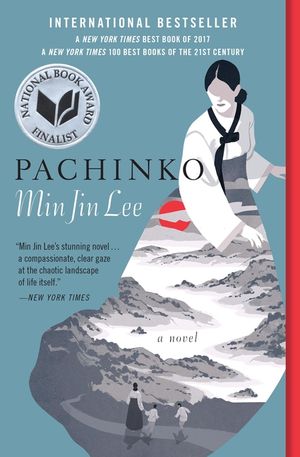
A New York Times Top Ten Book of the Year and National Book Award finalist, Pachinko is an "extraordinary epic" of four generations of a poor Korean immigrant family as they fight to control their destiny in 20th-century Japan (San Francisco Chronicle). NEW YORK TIMES NOTABLE BOOK OF 2017 * A USA TODAY TOP TEN OF 2017 * JULY PICK FOR THE PBS NEWSHOUR-NEW YORK TIMES BOOK CLUB NOW READ THIS * FINALIST FOR THE 2018 DAYTON LITERARY PEACE PRIZE* WINNER OF THE MEDICI BOOK CLUB PRIZE Roxane Gay's Favorite Book of 2017, Washington Post NEW YORK TIMES BESTSELLER * #1 BOSTON GLOBE BESTSELLER * USA TODAY BESTSELLER * WALL STREET JOURNAL BESTSELLER * WASHINGTON POST BESTSELLER "There could only be a few winners, and a lot of losers. And yet we played on, because we had hope that we might be the lucky ones." In the early 1900s, teenaged Sunja, the adored daughter of a crippled fisherman, falls for a wealthy stranger at the seashore near her home in Korea. He promises her the world, but when she discovers she is pregnant--and that her lover is married--she refuses to be bought. Instead, she accepts an offer of marriage from a gentle, sickly minister passing through on his way to Japan. But her decision to abandon her home, and to reject her son's powerful father, sets off a dramatic saga that will echo down through the generations. Richly told and profoundly moving, Pachinko is a story of love, sacrifice, ambition, and loyalty. From bustling street markets to the halls of Japan's finest universities to the pachinko parlors of the criminal underworld, Lee's complex and passionate characters--strong, stubborn women, devoted sisters and sons, fathers shaken by moral crisis--survive and thrive against the indifferent arc of history. *Includes reading group guide*
p.p1 {margin: 0.0px 0.0px 0.0px 0.0px; font: 11.0px Helvetica; color: #1f4e79} span.s1 {font-kerning: none}
p.p1 {margin: 0.0px 0.0px 0.0px 0.0px; font: 11.0px Helvetica; color: #1f4e79} span.s1 {font-kerning: none}
- Format: TradePaperback
- Author: Lee, Min Jin
- ISBN: 9781455563920
- Condition: New
- Dimensions: 8.00 x 1.50
- Number Of Pages: 512
- Publication Year: 2017
Customer Reviews
Rating Snapshot
5 ★
91%
4 ★
9%
3 ★
0%
2 ★
0%
1 ★
0%
11 Ratings
0
0% Would Recommend
0 Recommendations
Review Images
Sort by:
-
An amazing saga of love, loss and perserverance
Patricia G. - 1 year 1 month agoThe story begins with a daughter that no one expected to ever be born. As she grows and finds love she learns that life is not the way her innocent mind thought. She is left pregnant and the story continues for four generations. You will be pulled in as you see her struggle to make decisions to protect her child and ensure a future for him, marry a Missionary and moves to Japan where Koreans were treated harshly and fight to survive. An Epic read!
HPB Staff Review -
An expose on racism through four generations
Kaitlyn R. - 3 years 9 months agoIn Pachinko we follow four generations of a Korean family living in Japan, starting during the Great Depression and ending in a more modern era. Each generation is faced with the same problems such as sexism, racism and personal identity. Racism is the overall theme of the novel, but it also explores the ideas of being a woman in a male-dominated world. Neither change, but often become more subtle overtime. Min Jin Lee shows a plethora of women working within the confines of the patriarchy before them and becoming strong and independent. Pachinko is a gamble, as are often the lives of the Korean people living within Japan.
HPB Staff Review -
Great book
Emily R. - 4 years 6 months agoAmazing book. Have been recommending it to everyone
-
A study of Race vs. Ethnicity
Melissa S. - 5 years 5 months agoAn easy read in that it's both engaging and well-written. I especially appreciated the delicacy with which the many moral dilemmas were presented; most revolve around situations explained in potentially uncomfortable but necessary detail, which stops just shy of gratuitous description. Moreover, each character retains the dignity of hypothetical real-life counterparts as they're each fully developed, i.e. no flat stock "townspeople" or characatures here. Traditionally, racism or religion tend to be a major focus of novels about American life while social class and family legacy are primarily themes of (modern) Asian or Indian literature. In this instance, all are equally intertwined. By following several generations spanning about 80 years, the story offers unique historically- based insights. I particularly enjoyed learning about the cultures-- and subcultures-- depicted, which (as far as I can tell) were fair and balanced. I hadn't before realized just how complex relationships were between countries within the same continent, even nuanced among different regions of each individual country. Yet, despite differences in backgrounds, the Human Condition varies little: there are endless decisions to be made, some with inevitable outcomes, and all actions have consequences-- often affecting future generations. Yet, ultimately, we all struggle to figure out who we are and where we fit. To do so, we must figure out where home is.
-
Beautiful
Rowan P. - 5 years 6 months agoI loved this book. It is not action packed but I appreciate it for all of the nuances in relationships and seeing a side of Korean and Japanese culture that I was never aware of. Simultaneously enlightening, heartbreaking, and beautiful. #SpringPicks